
Constructed-response questions ask you to produce a written answer rather than select one. They measure whether you can apply knowledge, reason with evidence, and communicate clearly. They may feel less predictable than multiple-choice questions, but they are not a test of inspired writing. A dependable process matters as much as what you know.
What is a constructed-response question?
A constructed-response question, or CRQ, gives you a prompt and asks you to create the answer. Depending on the exam, you may need to explain an instructional decision, analyze a classroom scenario, interpret student work, or support a claim with subject-area knowledge.
These questions help a testing program see skills that a selected-response question cannot fully measure. A well-designed CRQ can show whether you can:
- organize related ideas into a logical response;
- explain why a strategy, conclusion, or next step is appropriate;
- apply what you know to a realistic teaching situation; and
- use evidence or examples instead of relying on unsupported claims.
The specific format and scoring scale differ by exam. Before test day, review the official test framework and scoring guide for your assessment so you know how many responses you will write, how much time is available, and what the rubric rewards.
Read the prompt for exactly what it asks
Start by reading the entire prompt without drafting. Then read it again and identify every distinct task. A single question often contains two or three requirements—describe, then explain, then give an example. Circle, underline, or jot down each task verb and the subject it applies to.
Pay attention to limits in the wording. If the prompt asks for two strategies, provide two developed strategies rather than a long list. If it asks how a teacher should respond next, focus on the next instructional decision rather than retelling the whole scenario. Answering two of three parts is one of the most common ways an otherwise strong response loses points.
Translate the prompt into a short checklist before moving on. For example:
- identify the student's misconception;
- describe one instructional strategy; and
- explain why that strategy addresses the misconception.
That checklist becomes the structure of your response and the final review you perform before submitting it.
Plan with evidence before you write
Spend a minute or two making a compact outline. List each part of the prompt and, beside it, the specific evidence, example, or reasoning you will use. Your plan does not need full sentences. Its job is to keep the response complete and prevent you from discovering halfway through that your best example belonged in an earlier paragraph.
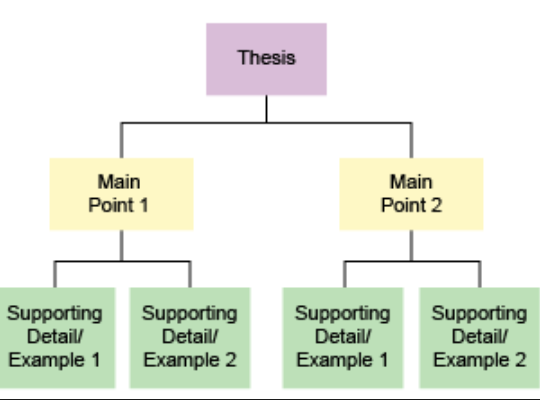
For a classroom scenario, useful evidence may include details from the prompt, an instructional principle, a relevant assessment result, or a concrete example of what the teacher or student would do. For a content-area question, evidence may be a fact, calculation, quotation from a supplied passage, or a step in your reasoning.
Use the prompt as your boundary. You do not receive extra credit for including everything you know about a topic. Choose the information that directly proves or explains your answer.
Answer directly and organize for the scorer
Begin with the answer, not a long introduction. Lead each paragraph with the point it makes, then support that point with evidence and explain the connection. Scorers evaluate the response against a rubric, so make your structure easy to follow: one main idea per paragraph, clear transitions, and language that connects to the prompt.
A simple paragraph pattern works for many CRQs:
- Point: State the strategy, conclusion, or claim.
- Evidence: Give a specific detail, example, or relevant fact.
- Explanation: Show why that evidence supports the point or solves the problem in the prompt.
Avoid assuming the scorer will fill in missing reasoning. A statement such as “the teacher should use a formative assessment” is only a starting point. Explain what the assessment could look like, what information it would reveal, and how the teacher would use the result.
Professional, precise language matters more than elaborate vocabulary. Use complete sentences and the terminology of your field when it adds accuracy, but do not bury a clear idea under jargon. Unless the prompt asks for a personal reflection, keep the focus on the scenario and the evidence.
Manage your time and leave room to review
Budget your available time before you begin. A practical split is a small amount for reading and planning, most of the time for drafting, and a final few minutes for review. If the exam includes multiple responses, divide the section time so one difficult prompt cannot consume the time reserved for another.
During review, return to the checklist you made from the prompt. Confirm that every required part is present and that each important claim has support. Then check for missing words, unclear pronouns, or a sentence whose meaning changed while you edited it. Correct errors that interfere with clarity first. Minor spelling or punctuation errors usually matter less than an incomplete answer, weak evidence, or unexplained reasoning, though you should always follow the official rubric for your exam.
If you run short on time, prioritize a complete, direct answer over an elegant opening or conclusion. A scorer cannot award credit for reasoning that never made it onto the page.
How are constructed responses scored?
Most constructed responses are scored with a rubric. The exact categories and point values vary, but rubrics commonly look for some combination of task completion, accurate content, relevant support, clear reasoning, and coherent organization.
| Rubric area | What a strong response usually demonstrates |
|---|---|
| Completeness | Every part of the prompt is addressed directly. |
| Accuracy | Ideas and terminology are correct for the subject and situation. |
| Evidence | Claims are supported with relevant details, examples, or facts. |
| Reasoning | The response explains how the evidence supports the answer. |
| Organization | Ideas appear in a logical order and are easy to follow. |
Scorers are trained to apply the published criteria rather than reward a particular writing style. That is good news: you can prepare by studying the rubric, comparing sample responses at different score levels, and practicing the behaviors the rubric describes.
How to prepare before test day
Do not make the first timed CRQ you write the one on your official exam. Begin with the test framework and a few representative prompts. At first, practice the process without a timer: unpack the task, create a plan, draft, and compare your answer with the rubric. Once the routine is familiar, add realistic time limits.
Review each attempt for patterns. You may know the content but regularly miss a second task in the prompt. You may give good examples without explaining why they matter. Or you may spend too long planning and leave too little time to write. A specific diagnosis gives you something useful to practice in the next response.
Reading strong sample answers also helps, but use them to study structure—not to memorize a script. Notice where the writer answers the task, introduces evidence, and connects the evidence to a conclusion. Then apply that pattern to a different prompt in your own words.
Constructed-response practice examples
Practice prompts should resemble the content and level of thinking on your exam. Here are three general examples you can adapt to your subject area:
- A student repeatedly makes a specific error. Identify the likely misconception, describe an instructional response, and explain how you would check whether the response worked.
- Review a short classroom scenario. Describe one action the teacher should take, support the choice with an instructional principle, and explain a possible effect on student learning.
- Analyze a sample of student work or assessment data. Identify one strength and one need, then propose a next step supported by details from the sample.
After writing, score your own response with the same questions a scorer might use: Did I answer every task? Is my content accurate? Is each claim supported? Did I explain the connection? Can a reader follow the organization without guessing?
Practice with real, test-aligned prompts
The fastest way to improve is deliberate practice against prompts that mirror your exam's format and rubric. A 240 Tutoring study guide includes test-aligned practice and detailed explanations so you can rehearse this process until it feels automatic on test day. The goal is not to memorize one perfect response. It is to build a routine you can trust when the topic, scenario, and clock are all new.
Frequently asked questions
How long should a constructed response be?+
Long enough to fully address every part of the prompt with specific evidence, and no longer. Most scoring rubrics reward completeness and clarity over length, so answer each part directly rather than padding.
Should I write an outline first?+
Yes. A one- to two-minute outline that lists the parts of the prompt and the evidence you'll use for each keeps your response organized and helps you avoid forgetting a required element under pressure.
What matters most to scorers?+
Addressing every part of the prompt, supporting each claim with relevant evidence or examples, and organizing the response so a scorer can follow your reasoning. Check the official rubric for your exam to confirm the specific criteria.